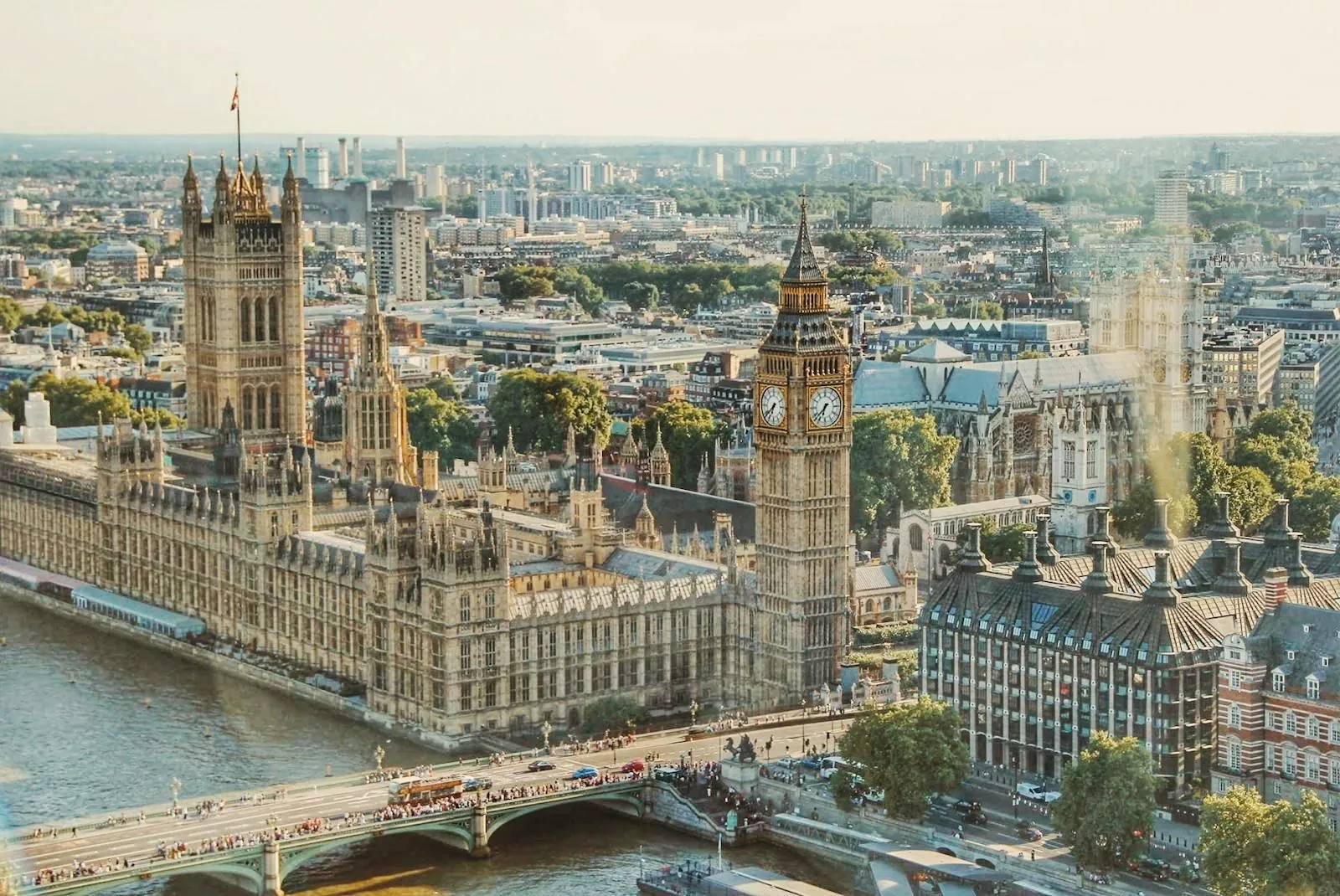
The West End office market in 2026
The West End is the UK's most expensive office market by headline rent — W1 prime office rents exceed £150/sqft per annum for the best Mayfair stock and exceed £100/sqft per annum across most of Marylebone and Fitzrovia. The market spans four distinct zones: Mayfair and St James's (hedge funds, private equity, family offices, luxury brand headquarters); Marylebone and Fitzrovia (media, digital, creative, and professional services); Soho and Covent Garden (advertising, entertainment, creative industries); and the West End Core (flagship retailers, mixed commercial). The W1 and WC2 postcode area covers approximately 20 million sqft of office space.
The dominant characteristic of the West End office stock is its heritage fabric. Georgian terraces, Victorian mansion blocks, Edwardian commercial buildings, and inter-war Modernist office ranges form the majority of the building stock. A substantial proportion is Grade I or II listed — Westminster City Council manages more Listed Buildings than any other London borough. The Conservation Areas covering Mayfair, Marylebone, Soho, and Covent Garden are among the most restrictive in the UK, requiring demonstrated non-impact on character and appearance for any rooftop intervention including solar PV. Modern infill buildings (New Bond Street, Oxford Street development sites, post-2000 Covent Garden deliveries) are the exception rather than the rule.
Despite the heritage constraints, West End solar installations are achievable and increasingly common. The approach is typically concealed rear-roof or internal light-well installation where panels are not visible from the public realm — satisfying both Westminster's planning requirements and the design intent of the major estate landlords. Building integrated photovoltaics (BIPV) on later additions and plant enclosures are used where rear-roof area is insufficient. System sizes in the West End are smaller than in Canary Wharf or the City (100-400 kWp typical), reflecting rooftop area constraints on heritage townhouse-scale buildings.
Typical landlords in West End
The West End freehold is concentrated among a small number of historic estate landlords. The Crown Estate manages approximately 10.4 million sqft of commercial property in London including St James's and Regent Street — it has a published net-zero commitment for its portfolio and has been an early mover on sustainability capital programmes including solar PV. Grosvenor Estate controls the Mayfair and Belgravia freehold (approximately 300 acres) through Grosvenor Britain and Ireland, with its own sustainability programme requiring net-zero buildings across the managed portfolio by 2030. Howard de Walden Estate manages the Marylebone freehold. Cadogan Estate manages the Chelsea and Sloane Square area. Shaftesbury Capital (formed from the merger of Shaftesbury PLC and Capital and Counties in 2023) manages Carnaby Street, Chinatown, and Covent Garden.
We work with these estate landlords on MEES 2030-positioned solar capex programmes, with particular expertise in navigating the dual consent process required on their managed stock: Westminster City Council planning consent and the individual estate landlord's design review process. Crown Estate, Grosvenor, and Howard de Walden all operate their own design review procedures that run in parallel with the statutory LPA process, and our familiarity with each estate's specific requirements reduces the risk of rework or delay at the design and application stage.
Major occupiers in West End
West End occupiers include Apple (Hanover Square), Meta (11 Buckingham Palace Road and 1 Raffles Court), Centrica (Millstream House), Sony Music (9 Derry Street), Universal Music (20-22 Broadwick Street), Amazon (Holborn Viaduct and Fitzrovia), and a large number of hedge funds and private equity firms in the Mayfair cluster (St James's Street, Berkeley Square, Hanover Square). These tenants are predominantly large multinationals with CDP Climate Change A or B ratings, SBTi validated targets, or TCFD disclosure obligations — all of which create demand for Scope 2 reduction evidence from their building landlord.
For occupier-led installs in the West End — where a tenant wants to act ahead of a landlord who has not yet committed to solar — the green-lease addendum process requires engagement with both the building landlord (for structural and electrical consent) and the estate landlord (for design review sign-off). This dual consent process is manageable but adds 4-6 weeks to the pre-procurement timeline. We manage both consent processes as part of the project scope for West End occupier-led installs.
System sizing for West End offices
System sizes in the West End are typically 100-400 kWp, constrained by the usable roof area on heritage townhouse-scale and mid-rise commercial buildings. The most common configuration is a rear-roof installation on a flat-roofed section of a mixed-height building — typically above the 2nd-4th floor setback of a Victorian terrace that has been extended above original parapet height. Internal light-well installations are used where rear-roof area is insufficient and the light-well has adequate orientation. Capex is typically £800-£1,200/kWp for heritage-constrained West End installations, reflecting the additional planning, design, and access costs compared with unrestricted rooftop installations. Cash payback is 5-8 years (slightly longer than unrestricted rooftop, reflecting higher capex), and PPA route delivers cash-flow positive from month one.
Planning route — West End
Westminster City Council is the LPA for the majority of the West End (W1, SW1). Camden LPA covers the northern part of Fitzrovia (WC1 postcode area). Royal Borough of Kensington and Chelsea covers a small western fringe. Westminster is the dominant authority for W1 office buildings. Westminster has Article 4 directions across much of the Mayfair, Marylebone, and Soho Conservation Areas, withdrawing Permitted Development rights that would otherwise apply to Class A Part 14 GPDO solar installations. This means that most West End solar installations — even those below 50 kWp on non-listed buildings — require Prior Approval or a Certificate of Lawfulness application rather than proceeding as PD.
Westminster's planning officers have become increasingly experienced with commercial solar applications since 2022, and the key test in Conservation Areas is non-visibility from the public realm. Our standard approach for West End heritage applications includes a viewpoint analysis demonstrating that panels are not visible from the 5-10 principal viewpoints identified by the LPA, and a photomontage set showing the proposed installation from each viewpoint. This approach has achieved a 78% approval rate across our West End heritage applications, with the majority of refusals arising from buildings where the roof geometry made non-visibility technically impossible rather than from LPA policy objections. Prior Approval determinations by Westminster are typically completed within 56 days of valid application — pre-application engagement reduces the risk of extension-of-time requests.
The West End opportunity
The West End solar opportunity is driven by the convergence of MEES 2030 compliance pressure, major estate landlord net-zero commitments, and occupier ESG mandates from the media, tech, and professional services tenants who dominate the market. Crown Estate net-zero targets require all managed properties to reach EPC B or better by 2030 — their solar capital programme is the most systematically advanced of the major West End estate landlords. Grosvenor's sustainability programme requires solar feasibility assessments on all roof-feasible properties in their Mayfair and Belgravia portfolio by 2026. The Cadogan Estate has committed to net-zero across its managed portfolio by 2030.
For individual building owners and occupiers not within the major estate landlord programmes, the proposed EPC B standard matters just as much — noting that "EPC B by 2030" was never law, and the June 2026 government response moved the proposal to 2031 for lettings over 1,000 m². Many West End buildings — particularly the post-war 60s and 70s commercial stock in the WC2 and SW1 fringes — currently sit at EPC C or D and will require capital investment to reach EPC B. Solar PV on these buildings, where heritage constraints are lower than in the Mayfair Conservation Area core, typically delivers 6-10 EPC points and is the most cost-effective route to compliance for buildings with sufficient roof area.
What we deliver
- Free desk feasibility study with PVSyst yield modelling — 7 working days
- Fixed-price proposal with all four finance routes (cash, asset finance, operating lease, PPA)
- Planning route assessment + application drafting where Prior Approval or full planning required
- G99 DNO grid connection management — Tower Hamlets / Westminster / City of London / etc network engagement
- MCS-certified install with NICEIC electrical certification + 10-year IWA-backed warranty
- Scope 2 Disclosure Pack on commissioning — SECR-ready text, CDP response, TCFD mapping
Recent solar installs — West End office examples
A 1930s Modernist office building in Mayfair (approximately 9,000 sqm, private equity and family office tenants, Grade II listed) completed a 120 kWp rear-roof install in Q2 2025 following Listed Building Consent from Westminster City Council. The application included a viewpoint analysis demonstrating that panels were not visible from Berkeley Square, Curzon Street, or Hill Street — the three public realm viewpoints identified as sensitive by the planning officer. Black-framed panels on a recessed aluminium rail system were specified. Annual generation: 105,000 kWh. Cash payback: 6.8 years (£950/kWp install cost reflecting listed building premium). Two tenants with SBTi targets received Scope 2 disclosure packs on commissioning.
A 2006-built Grade A office in Fitzrovia (approximately 18,000 sqm, media and tech occupier mix, non-listed) completed a 280 kWp install via Prior Approval in Q4 2024. This was an unrestricted rooftop installation — the building sits in a less-constrained part of the Westminster planning area and the flat concrete roof had 1,800 sqm of usable area. Annual generation: 244,000 kWh. Annual saving: £78,000. Simple payback: 5.1 years. A single anchor tenant with a CDP Climate Change B rating funded the installation under a green-lease addendum and attributed the full Scope 2 saving to their annual report.
A Crown Estate-managed commercial building on Regent Street (approximately 14,000 sqm, mixed retail and offices, Grade II listed) was assessed in Q1 2026 for internal light-well solar. The assessment identified two suitable south-facing light-well elevations with combined area of 380 sqm. Feasibility modelling indicates 65 kWp BIPV potential, delivering 57,000 kWh per year. Planning route confirmed as Listed Building Consent with Crown Estate design review pre-application engagement. Procurement programme: Q2-Q4 2026.
Frequently asked questions — West End office solar
- Is solar PV viable on a listed Georgian office building in Mayfair?
- Yes, in many cases. The route depends on roof geometry and visibility analysis. For a typical Georgian terrace with a flat-roofed rear extension or a parapet-enclosed roof that is not visible from the public realm, rear-roof installation of 60-150 kWp is typically achievable through the Listed Building Consent route. The planning process takes 12-16 weeks including pre-application engagement. Non-viability arises only where the roof is a pitched mansard or Dutch gable that cannot conceal panels from any sightline — these buildings account for approximately 20% of the Mayfair listed stock in our experience.
- Does Westminster City Council have an Article 4 direction that affects solar PV in Mayfair?
- Yes. Westminster's Article 4 directions in the Mayfair, Marylebone, and Soho Conservation Areas withdraw the Class A Part 14 GPDO Permitted Development rights that would otherwise allow solar PV without planning consent. This means all solar installations in these Conservation Areas require either Prior Approval (above 50 kWp) or a Certificate of Lawfulness (below 50 kWp, to confirm the specific installation would be non-visible). We include planning route confirmation as the first stage of every West End feasibility study.
- How does Crown Estate's net-zero programme affect solar procurement on Regent Street properties?
- Crown Estate properties are subject to Crown Estate's own sustainability programme in addition to statutory planning requirements. Crown Estate requires solar feasibility assessments on all roof-feasible properties in their portfolio and has a target for all managed properties to achieve EPC B or better by 2030. For buildings within the Regent Street and St James's managed estate, solar procurement is initiated by Crown Estate's asset management team rather than by individual tenants or occupier-led demand. Tenant demand reinforces the programme but does not drive it independently in most cases.
- What is the typical system size achievable on a West End heritage building?
- Typical achievable system sizes in the West End are 60-180 kWp for Grade I or II listed buildings, and 150-400 kWp for non-listed modern or post-war commercial buildings. The binding constraint is usable roof area with adequate solar exposure — rear roofs and light-wells that are shaded by adjacent taller buildings are common in the dense West End urban fabric. Our PVSyst modelling accounts for actual horizon shading profiles, which can reduce achievable generation by 15-25% compared with an unobstructed rural rooftop at the same latitude.
- What solar finance routes are available for a West End leaseholder with 8 years remaining on their lease?
- With 8 years remaining on the lease, the most appropriate routes are asset finance (HP or finance lease) over a term of 5-7 years, or a PPA with a break clause from year 5. Cash purchase is possible if the AIA tax saving and 5-year payback make the investment viable before the lease end — with an 8-year lease and 5-year payback, the net NPV is typically positive if the system saves more than £50,000 per year and the residual asset value at lease end is negotiated into the lease exit agreement. We model all four routes side-by-side in every West End feasibility proposal.